
• Drive: 2-minute video excerpt

  • TED Talk on Drive

  • Order the new book!

  • Get the other books

  • Get my free newsletter!

    Receive excerpts from my book, DRIVE, along with exclusive articles, videos and other sneak peeks.

  • Twitter

  • Categories

  • Four letters separated by four decades

    In 1966, Robert Indiana gave the world a four-letter sculpture that soon became iconic.

    Today, on Design Observer, I saw a piece that pays homage to Indiana. (“Homage to Indiana” is totally a title for a mediocre independent film — Ed.) Like many works that have parodied Indiana’s work, this four-letter sculpture bears a superficial resemblance to its predecessor but creates a distinctly different effect.
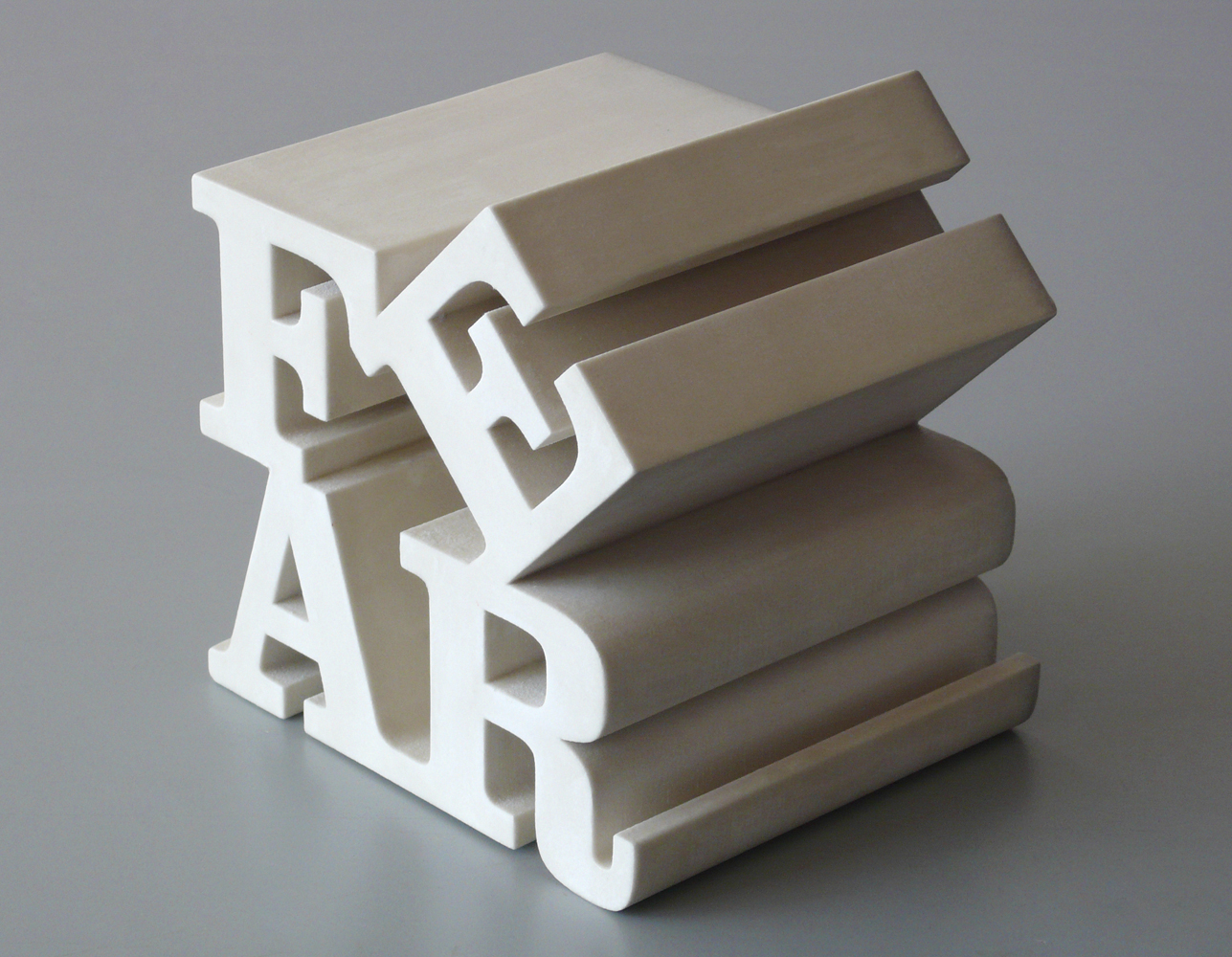
    fear_cropped-1jpg.jpeg

    Is this one a new icon for a new time? Or a just another sign of momentary cultural jitters? Or is it something else altogether?

    Get a Trackback link

    6 Comments

    1. Hope on April 6, 2009

      What Are You Looking for in Love?
      Robert Indiana’s “LOVE”
      By Ken Kimmelman
      A talk by the Emmy award-winning filmmaker and Aesthetic Realism consultant whose public service films The Heart Knows Better and What Does a Person Deserve? are being shown nationwide.

      When, in the 1960’s, I first saw Robert Indiana’s “Love,” it really took me, as it did people across America – it was the design for the biggest selling US postage stamp ever issued and also the best-selling Christmas card ever put out by the Museum of Modern Art. The more I have looked at it the more I am moved. I feel this is an important work of art.

      In his great 15 Questions “Is Beauty the Making One of Opposites?” Eli Siegel describes these opposites, which I think are central to the beauty of this work:

      REPOSE AND ENERGY

      Is there in painting an effect which arises from the being together of repose and energy in the artist’s mind? – can both repose and energy be seen in a painting’s line and color, plane and volume, surface and depth, detail and composition? – and is the true effect of a good painting on the spectator one that makes at once for repose and energy, calmness and intensity, serenity and stir?

    2. Ethereal on April 6, 2009

      it does elicit a reaction and of all the four letter words that could be picked, I think it is apt.
      Interestingly, there are other words to see here though, esp. if you’ve ever played Boggle:

      “far”
      “ref”
      “fare”
      “are”
      “ear”
      “era”
      “fea” (spanish for ugly, female form of the term)

      wordsmith.org’s anagram server would have a more complete list.

    3. Pixie Stevenson on April 7, 2009

      We’re either in love or fear, which one is it going to be?

    4. Tracy Feld on April 8, 2009

      With regard to FEAR, Roosevelt had it right all along — and not just as it applied/ applies to our economy. And Pixie has it right, too — we get to choose. Fear doesn’t actually exist, unless we let it in. 80% of what we’re afraid of/ worried about never actually happens, at least not in the way we envision it (according to somebody…). So, we could choose to spend our energy on something else. Imagine that. Fear is a vision. We could choose different visions.

    5. Scott Bowlus on April 23, 2009

      What a cool little site :)
      So first off – it’s totally something else, an icon for the times and a momentary cultural jitter. Which means only that its good Art and everyone can see it a little differently.

      Next – when I first saw it I thought the “E” is crooked, then thought “why do that?” and then thought maybe to spell the word “FAR”

      Then I read the comments, caught the part from Hope’s comment about the postage stamp, which made the title of the post make sense and made me realize that the only way I knew the “LOVE” sculpture was from a postage stamp.

      So to end a long-winded comment, Ethereal – I was totally playing boggle, I’m just not very good at it. Pixie – we are all in Love and Fear at the same time and we never get to choose, other than how we respond.

    6. Bill Salter on June 1, 2009

      The original captured the zeigeist of the era of sex, drugs and rock’n roll.

      The Design Observer piece imperfectly reflects the poisonous climate of the Cheney/Bush era. I would have chosen a more menacing typeface with blood, scorch marks and a hood (a la Abu Ghraib).

    Leave a comment

    Comment Policy: First time comments are moderated. Please be patient.